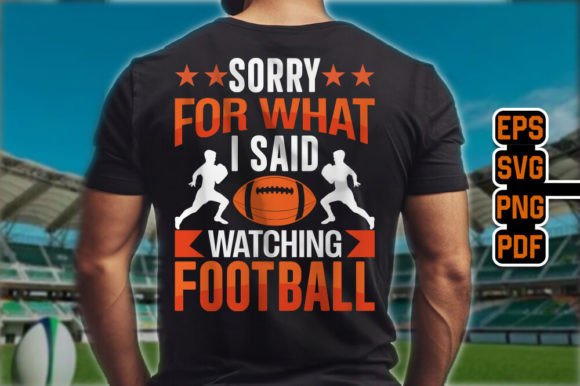
Sorry for What I Said Watching Football
As a designer who spends more time under the embroidery hoop than behind a computer screen, I have learned that not every graphic translates well into thread. There is a distinct difference between a design that looks great on a digital mockup and one that holds up to the tension of a machine needle. Today, I am evaluating Sorry for What I Said Watching Football, a piece categorized under T-Shirt Designs and Graphics, specifically looking at its viability for real-world embroidery projects. My goal is to provide practical insight for fellow designers, small business owners, and crafters before they commit this file to their production line.
The first impression of Sorry for What I Said Watching Football is one of immediate relatability. The concept taps directly into the universal experience of sports fandom, where emotions run high and words are often exchanged in the heat of the moment. For an embroidery project, this mood is crucial. It suggests a casual, approachable aesthetic rather than a formal or corporate look. When I visualize this as a finished product, it feels like it belongs on a cozy sweatshirt, a rugged tote bag, or perhaps a personalized gift for a partner who loves the game. The layout appears to prioritize readability, which is the single most important factor when converting text-based graphics into stitch patterns.
In my recent workflow, I was preparing a custom batch of embroidered patches for a local rugby club fundraiser. The client wanted something humorous but respectful, acknowledging the intensity of the sport without being overly aggressive. I pulled Sorry for What I Said Watching Football from my asset library to test. While the original listing describes it as a PNG print-ready file, my job as a reviewer is to assess how that vector or raster data will behave once converted into a machine embroidery design. The phrase itself carries a narrative arc; it implies a confession, a joke shared among friends, and a moment of reflection. This narrative quality makes it an excellent candidate for personalized gifts or boutique branding where the story behind the item adds value.
When considering where this design fits best, the versatility is apparent. It works exceptionally well for custom apparel like hoodies and t-shirts, where the fabric provides a stable canvas for satin stitch lettering. However, the true test lies in smaller applications. Imagine stitching this onto a baby onesie or a cap. The text needs to remain legible even when scaled down. If the design relies heavily on intricate details or tiny serifs, it might get lost in the texture of the fabric. Conversely, if the font is bold and the spacing is generous, it could become a standout feature on a tote bag design or a kitchen towel. The key is matching the complexity of the design to the surface area available.
There are specific scenarios where caution is required. Embroidery on curved surfaces, such as baseball caps, introduces distortion that flat designs do not face. A long phrase like Sorry for What I Said Watching Football might need to be broken into two lines or adjusted for curvature to avoid bunching. Similarly, textured fabrics like heavy denim or bouclé can swallow fine details. If the design includes thin lines or delicate corners, they may disappear entirely on a rough weave. In these cases, I would advise checking the stitch density carefully. High density on stretchy fabric can cause puckering, ruining the drape of the garment. Always test the design on scrap fabric that matches your final material to ensure the thread colors pop against the background without causing the fabric to warp.
Visual appeal is not just about the image; it is about the tactile experience of the finished product. A well-executed embroidery project builds trust with the customer. When a buyer receives a handmade item, they are paying for the craftsmanship as much as the design. If Sorry for What I Said Watching Football is stitched cleanly, with tight edges and no loose threads, it elevates the perceived value of the item. This is particularly important for Etsy sellers and small shop products competing in a crowded marketplace. A professional finish signals that the maker cares about quality, which encourages repeat business and positive reviews.
For those using this design in commercial embroidery projects, understanding the limitations is vital. The provided description mentions a PNG file, which is a raster format. To use this effectively in a machine, you typically need a vector conversion or a digitized file that accounts for stitch direction and pull compensation. If you are working with a digital embroidery file that has already been digitized, inspect the running stitch areas for gaps and the fill stitch sections for coverage. Ensure that the design does not exceed the capabilities of your specific hoop size. Large designs on small hoops require multiple jumps, which can lead to misalignment and frustration during production.
I also recommend creating printable mockups before cutting into expensive materials. Place the design on various backgrounds—dark navy, heather gray, white—to see how the contrast holds up. This step helps you decide if you need to adjust the thread colors or add a contrasting backing to make the text stand out. For holiday gifts or seasonal items, consider how the design fits the occasion. A rugby-themed quote might be perfect for a post-Christmas gift or a birthday present for a die-hard fan, adding a personal touch that generic store-bought items lack.
Finally, let us address the technical prerequisites. Before you start stitching, confirm the licensing terms. Some design assets are intended for personal use only, while others allow for commercial sales of finished goods. If you plan to sell items featuring Sorry for What I Said Watching Football, ensure you have the right permissions. Additionally, verify the recommended stabilizer type. A cut-away stabilizer is usually best for maintaining shape on garments that will be washed frequently, whereas tear-away might suffice for temporary decorations. Always check the specific requirements for the embroidery file you are using, as different machines handle tension differently.
In conclusion, Sorry for What I Said Watching Football offers a strong foundation for a variety of creative endeavors. Its strength lies in its humor and relatability, making it a versatile choice for craft business items ranging from nursery decor to adult accessories. By approaching the digitization process with care, testing on appropriate fabrics, and respecting the technical constraints of machine embroidery, you can transform this graphic into a high-quality finished product that customers will love. Whether you are a hobbyist making a unique gift or a professional decorator fulfilling a large order, this design has the potential to be a standout addition to your portfolio.