Camera Concept Illustration: A Designer's Embroidery Review
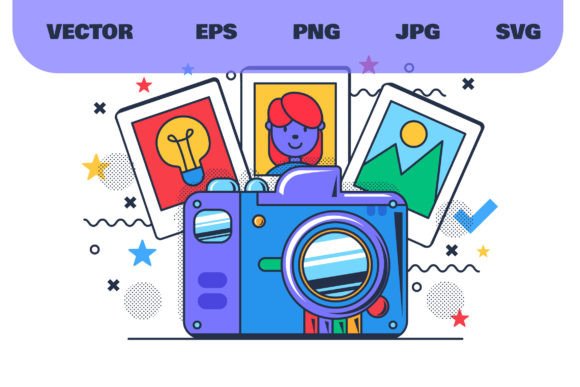
When I first opened the file for Camera Concept Illustration, my immediate thought wasn't about the technical specs or the vector quality. It was about the vibe. This isn't a photorealistic camera trying to trick your eye; it is a clean, flat outline that screams "creative" and "fun." As someone who has spent years stitching designs onto everything from denim jackets to baby onesies, I know that not every graphic translates well to thread. Some look great on a screen but turn into a muddy mess under the needle. This particular Graphics asset, however, feels like it was born for the hoop.
The mood here is playful yet professional. The cartoon style strips away unnecessary clutter, leaving just the essential shapes of a camera lens, body, and strap. For an embroidery designer, this is gold. There are no tiny, intricate lines that will disappear in the stitch density, and the bold outlines promise a crisp finish. It strikes a perfect balance between being cute enough for a child's nursery decor and stylish enough for a boutique tote bag. When you hold the finished product up, the design reads clearly, making it instantly recognizable as a symbol of photography without needing text to explain it.
From Screen to Stitch: Real-World Application
I recently had a client asking for a custom line of merchandise for a local photography club. They wanted something unique for their members—something that felt handmade but looked cohesive. We tested Camera Concept Illustration on a variety of fabrics before settling on a heavy-duty canvas tote bag. The result was stunning. Because the design relies on strong outlines rather than complex shading, the satin stitches along the edges gave it a beautiful, raised texture that popped against the fabric.
This design is incredibly versatile when you think about where it can live. Imagine a personalized gift for a photographer's birthday. You could embroider it on a high-quality apron for a home studio, or perhaps on a cozy sweatshirt for a winter photo walk. The simplicity of the Illustrations category allows it to adapt easily. On a soft cotton tee, it looks like a modern streetwear graphic. On a structured cap, the flat outline fits perfectly over the curved surface without bunching up at the corners.
I also envision this working beautifully for holiday gifts. World Photo Day is approaching, and this design is tailor-made for a special commemorative item. A batch of embroidered patches featuring this camera concept would make excellent souvenirs for a workshop or a fun addition to a denim jacket. Even for digital sellers, this is a powerhouse. You can use it in printable mockups to showcase how a customer might see their new business branding, or include it in a digital product preview for crafters looking to add a quick touch to their sewing projects.
Where to Exercise Caution
While the potential is high, there are specific scenarios where Camera Concept Illustration requires a careful hand. If you are working with very small hoop sizes, you need to be mindful of the detail level. While the design is simplified, cramming it into a 4x4 inch area might force the machine to over-stitch certain curves, potentially distorting the shape of the lens. Always check the recommended hoop size before starting.
Fabric choice is equally critical. If you plan to put this on a stretchy jersey knit or a thin, flowy material without proper stabilization, the tension of the thread could cause the fabric to pucker. The flat outline works best on stable surfaces like twill, denim, or tightly woven cotton. Similarly, if you are using dark fabric, you must consider the thread colors carefully. A light outline on a black background might get lost unless you use a high-density fill stitch underneath or choose a bright, contrasting thread color.
Avoid placing this design on textured fabrics like thick terry cloth or boucle wool unless you are using a heavy stabilizer and adjusting the stitch length. The uneven surface can hide the clean lines that make this design so appealing. Also, be wary of products that require frequent, aggressive washing. While embroidery is durable, excessive friction can wear down the finer details of the outline over time, especially if the design is too dense.
Design Judgment and Visual Impact
One of the biggest challenges in embroidery is maintaining visual appeal after the digitizing process. Many designs lose their personality because the software tries to replicate pixels with threads, resulting in a blocky, unnatural look. Camera Concept Illustration avoids this trap. Its vector nature ensures that the curves remain smooth and the angles stay sharp. This clarity directly impacts product value. Customers can tell the difference between a mass-produced print and a well-executed embroidery piece. When they feel the texture of the satin stitch outlining the camera, it signals quality and craftsmanship.
This attention to detail builds trust. Whether you are an Etsy seller or running a small shop product line, a clean, professional-looking design reassures buyers that you care about the final presentation. It elevates a simple tote bag into a statement piece. Furthermore, the design is highly giftable. It resonates with anyone who loves capturing moments, making it a safe bet for personalized gifts, wedding favors for photography enthusiasts, or even corporate swag for a creative agency.
The versatility extends to brand consistency. If you are building a boutique brand around creativity or travel, this illustration serves as a perfect logo element. It can be used across different mediums—from a physical patch on a backpack to a digital icon on your website. The flat style ensures it remains legible whether it is large on a banner or tiny on a sticker label.
Essential Notes for the Embroidery Designer
Before you commit this design to a production run, there are a few practical steps every seasoned maker should take. First and foremost, test the design on scrap fabric. Nothing beats seeing how the thread interacts with the specific weave of your chosen material. Check the thread color contrast by laying out your spools next to the design file. Sometimes a color that looks good on the monitor needs adjustment when stitched.
Review the stitch density closely. If the design feels too dense, it might be stiff and uncomfortable to wear. If it is too sparse, the underlying fabric might show through, ruining the clean look. Confirm the hoop size matches your project dimensions to avoid cutting off parts of the camera. Inspect small details like the shutter button or lens rings to ensure they aren't getting lost in the stitching process.
It is also wise to test the design in black and white mockups. This helps you visualize the impact of the outline without the distraction of color. Compare how it looks on both light and dark fabric backgrounds to ensure the design holds up in all conditions. Use the proper stabilizer for your fabric type; a cut-away stabilizer is often necessary for items that will be washed frequently, like aprons or baby clothes.
Finally, always verify your licensing. Just because you bought the file doesn't automatically mean you have the right to sell finished products made from it. Confirm whether the license covers commercial embroidery, digital product sales, or both. If you are unsure, reach out to the creator or check the terms provided with the Graphics download. Being clear on these legalities protects your craft business and ensures you can sell your Camera Concept Illustration creations with confidence.
In conclusion, Camera Concept Illustration is more than just a pretty image; it is a functional tool for any designer looking to create meaningful, high-quality embroidered goods. Its clean lines, adaptable style, and friendly aesthetic make it a standout choice for everything from personal hobbies to commercial ventures. With the right preparation and execution, this design can become a signature element in your portfolio, delighting customers and elevating your brand.