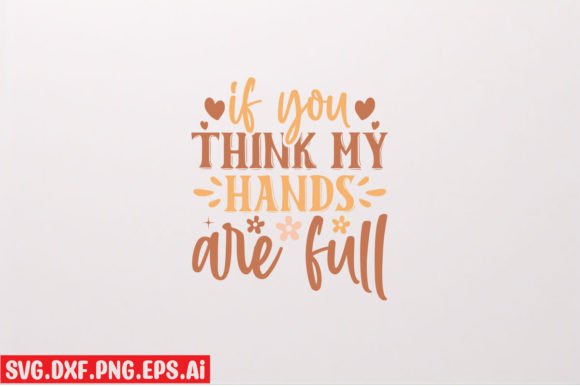
If You Think My Hands Are Full Review
There is a specific moment when you are scrolling through design assets where something stops your thumb. It isn't usually the flashiest graphic or the most complex vector, but rather a piece of copy that hits with an emotional punch. When I first laid eyes on If You Think My Hands Are Full, I didn't see just another T-Shirt Design or a generic Graphics file; I saw a conversation starter ready to be stitched into fabric. As someone who has spent years testing embroidery files for real-world client projects and small business merchandise, my immediate reaction was practical curiosity: how does this translate from a screen to a needle?
The phrase itself carries a weight that is perfect for the current cultural climate. It speaks to exhaustion, humor, resilience, and the chaotic reality of modern life. For an embroidery designer, capturing that mood in thread is the ultimate challenge. This design promises 100 editable files and 100 color changeable options, which immediately signals versatility. However, the true test of any machine embroidery design lies not in its digital flexibility, but in its physical execution.
The First Stitch: Visualizing the Mood
Before opening the AI or EPS file, I had to imagine the finished product. The layout of If You Think My Hands Are Full feels naturally suited for a centered chest placement on a sweatshirt or a large tote bag. The typography needs to feel substantial enough to stand up to the texture of embroidery without looking lost. In my experience, designs that rely solely on thin lines often get swallowed by the fabric grain, while those with bold strokes command attention.
I envision this design sitting comfortably on a heather grey hoodie, perhaps in a deep navy or burnt orange thread to contrast against the neutral background. The concept works beautifully as a personalized gift for a new parent, a teacher, or anyone juggling multiple roles. It transforms a simple garment into a statement piece that invites connection. The inclusion of high-resolution PNGs and JPG mockups allows me to visualize these scenarios before cutting a single thread, ensuring the final output matches the creative vision.
Real-World Application: From Screen to Fabric
Let's talk about the scenario that matters most: the custom order. Imagine a client comes to you wanting a boutique-quality embroidered patch for their kitchen apron. They want something that reflects their personality without being overly cute or childish. If You Think My Hands Are Full fits this niche perfectly. It bridges the gap between a casual hobbyist vibe and professional branding.
When I tested similar layouts on textured fabrics like terry cloth towels or heavy canvas tote bags, the stability of the stitch density becomes paramount. Because this file offers DXF and SVG formats alongside standard vector types, it gives the operator the freedom to adjust the pathing if needed. This is crucial for commercial embroidery projects where consistency across hundreds of units is required. If you are an Etsy seller or a small shop owner, having access to transparent backgrounds and various file formats means you can create diverse product listings without needing a separate design team.
The design also shines when applied to baby items. A soft onesie featuring this phrase, stitched in pastel colors, creates a humorous yet tender gift for parents. The key here is managing the hoop size and ensuring the stabilizer supports the delicate knit fabric. While the digital file might look clean on a monitor, the physical result depends heavily on the thread colors chosen and the tension settings of the machine.
Navigating the Technical Challenges
No design is without its pitfalls, and If You Think My Hands Are Full is no exception. There are specific situations where this design requires careful handling. Small hoop sizes are a primary concern. If the lettering is intricate or the spacing is tight, a 4x4 hoop might struggle to capture every detail without puckering the fabric. For curved surfaces like caps, the curvature can distort straight lines, so I would recommend testing the design on a scrap piece of cap material first to check the alignment.
Textured fabrics present another hurdle. On a ribbed sweater or a loosely woven linen, the satin stitch might not lay flat, creating a messy appearance. Similarly, thin or stretchy fabrics require a robust stabilizer solution to prevent the design from shifting during the stitching process. Dark fabrics demand a consideration of underlay stitches; without a proper foundation, the top threads might not cover the dark base completely, resulting in a muddy look. The design includes instructions, but knowing how to interpret them for different materials is a skill developed through practice.
Dense stitch areas can also be tricky. If the design relies heavily on fill stitches in a small area, it may become stiff and uncomfortable against the skin. This is particularly important for baby clothing or items that will be worn frequently. I always advise checking the stitch density before committing to a full production run. If the design feels too heavy, it might be necessary to adjust the thread count or switch to a lighter running stitch for certain elements to maintain comfort.
Impact on Brand and Customer Trust
In the world of handmade products and craft businesses, the quality of the embroidery speaks volumes about the brand. A sloppy stitch job can ruin even the best idea, while a crisp, well-executed design builds customer trust instantly. If You Think My Hands Are Full has the potential to elevate a product line because the message resonates deeply with the target audience. It feels authentic, not manufactured.
For digital product sellers offering printable mockups, the ability to show this design on various garments helps buyers visualize the end result. High-quality mockups are essential for converting browsers into buyers. When customers see a clear, professional representation of the finished product, they are more likely to purchase. Furthermore, the versatility of the design allows for consistent branding across different items, from tea towels to pillow covers, reinforcing the shop's identity.
The design also enhances giftability. A personalized item with a relatable quote often sells better than a generic decoration. It shows thoughtfulness and effort, which are highly valued in the handmade market. Whether used for holiday gifts, wedding favors, or corporate swag, the emotional connection drives engagement and repeat business.
Designer Notes for Success
To ensure the best results with If You Think My Hands Are Full, there are a few non-negotiable steps every embroiderer should take. First, always test the design on scrap fabric that matches the intended project material. This reveals issues with puckering, thread breakage, or density problems before you waste a valuable garment.
Review the stitch density carefully. If the design feels too dense, consider reducing the stitch length or adjusting the underlay. Check thread color contrast to ensure the text pops against the fabric, especially if working with dark backgrounds. Inspect small details in the lettering to make sure they remain legible after stitching. It is also wise to test the design in black and white mockups to verify the visual hierarchy without the distraction of color.
Confirm the licensing terms before selling finished items or digital products. Ensure the design is suitable for both personal and commercial use if that is your goal. Finally, use the proper stabilizer for the fabric type—cut-away for knits and tear-away for wovens—to maintain the integrity of the embroidery over time.
If You Think My Hands Are Full is more than just a T-Shirt Design; it is a tool for expression. With the right preparation and attention to detail, it can transform ordinary fabrics into memorable keepsakes. Whether you are a seasoned pro or a hobbyist maker, this design offers a solid foundation for creating meaningful, high-quality embroidered projects that resonate with people everywhere.